New vehicle selection experience to prevent incorrect selection during driver registration
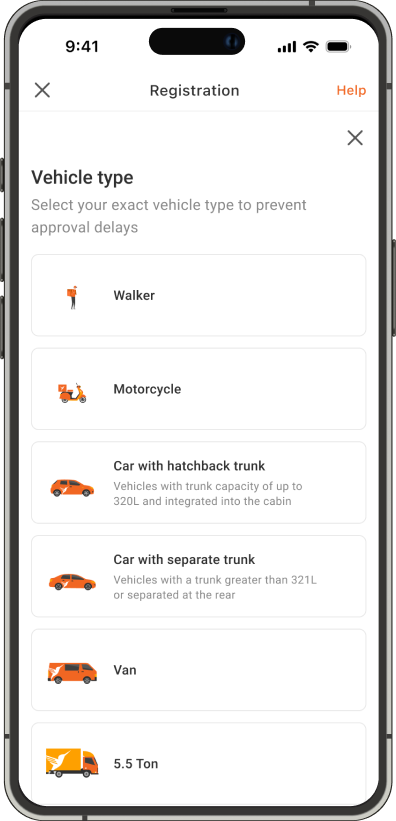
Increase in Driver supply has been a key success to the business to keep up with customer demand. During our analysis of the verification process, we identified an opportunity to optimize the verification team's workload specifically related to verifying drivers' vehicle types.
↓ 30%
Reduction in incorrect vehicle selections

↓ 2 hrs
Reduction in weekly workload to correct errors

↑ 3%
Increase in driver acquisition
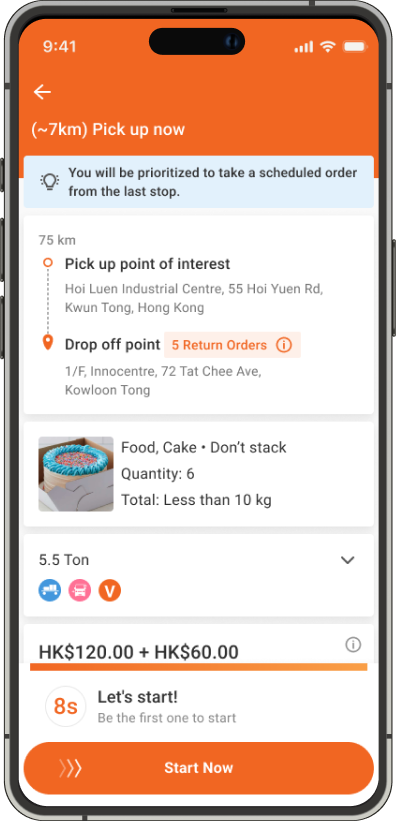
Lalamove is an on-demand delivery platform that connects 13 million users with 1.2 million driver partners in 11 markets across the world. Lalamove driver-partner app is a tool for drivers to receive and manage delivery requests from customers.
My role
- Defined what we could solve with design with a product manager
- Designed the user interfaces and experiences for the feature
- Ensured feasibility during ideation and alignment with design during implementation by consulting with engineers
Opportunity
Our business aims to boost driver supply efficiency and cut costs by streamlining registration. We identified an opportunity to optimize the verification process for driver vehicle types, addressing common errors made during registration, particularly in markets prone to frequent mistakes.
Changing drivers' vehicle types during registration slows the registration and lowers the conversion rate while increasing operational costs.
The opportunity is
How might we help drivers select the right vehicle types, minimizing potential mistakes?
Goal
The goal is to increase the driver conversion rate and ease the local operation team's workload.
The product manager set the goal and success metrics for this feature. We want to target:
- Reduction in the number of wrong vehicle type selections in registration
- Reducing the local team’s workload by correcting driver vehicle selection errors
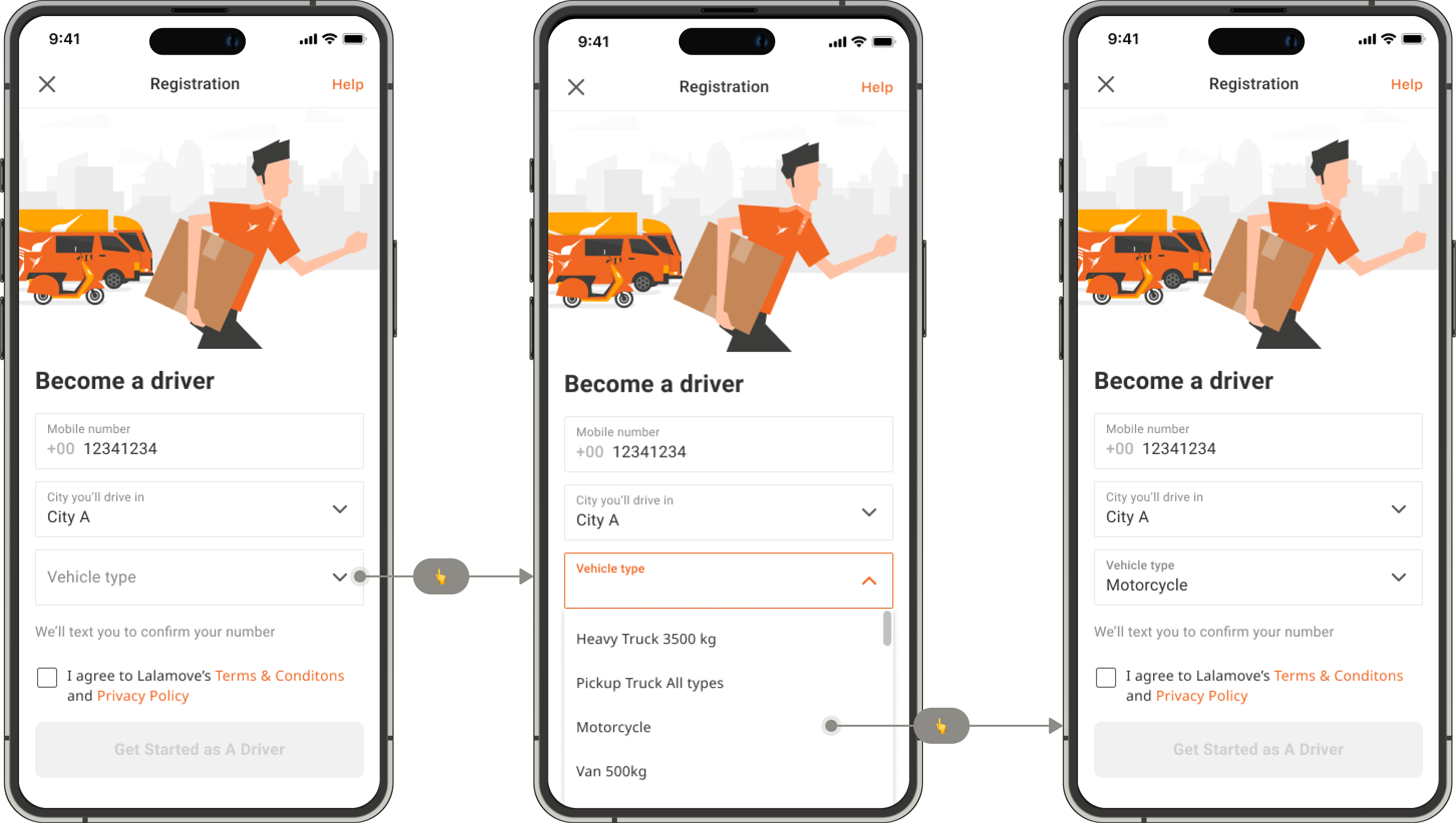
Existing solution

Steps
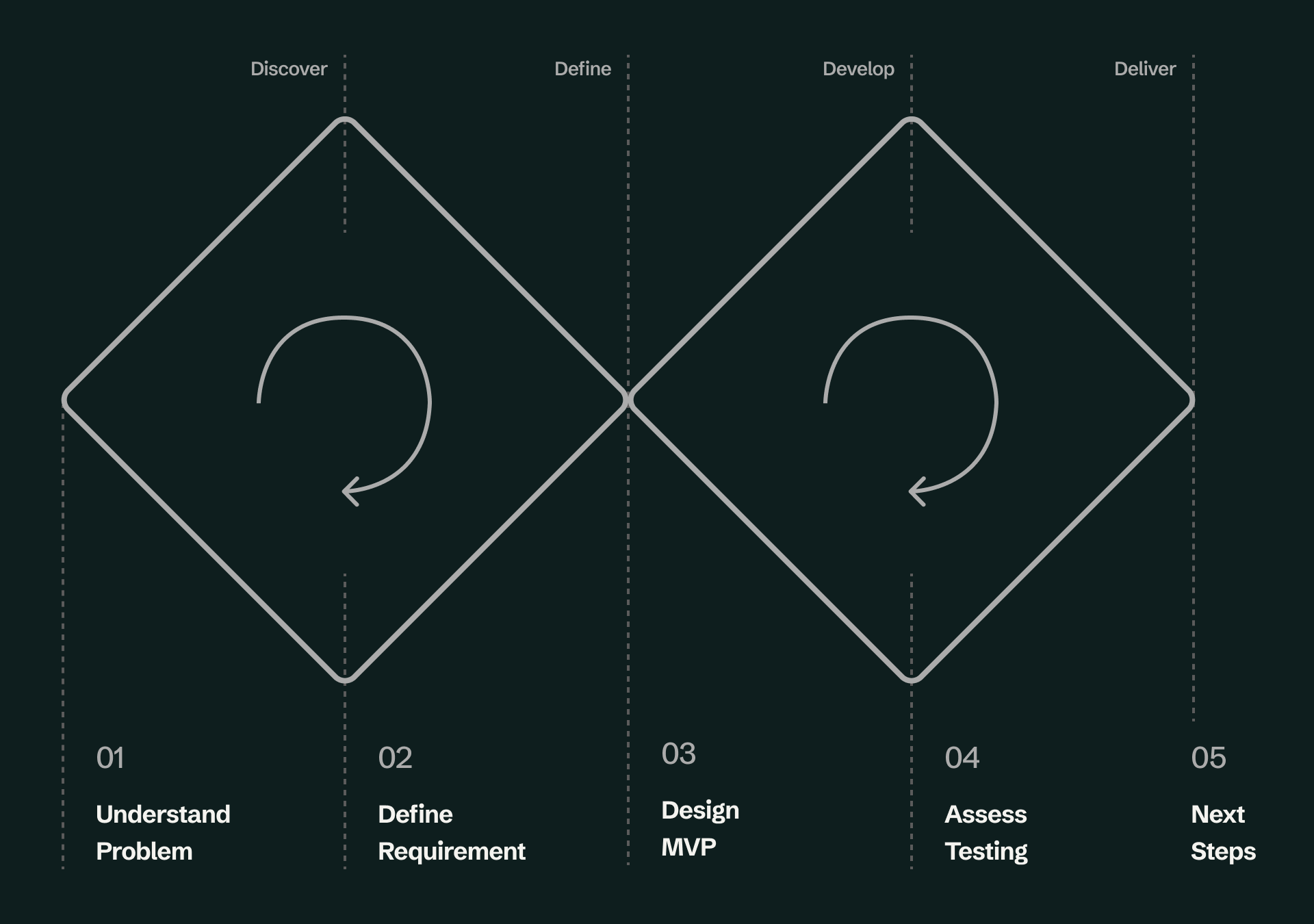
Understand Problem
Vehicle selection errors resulted in operational delays and conversion drops: confusion between car types, oversight in pick-up car registrations, and random selections among motor drivers.
The product manager set up the initial analysis, and I helped them clarify the root causes of the problem by asking questions and suggesting different ways to structure and analyze the problem.
Market A
The market had 409 incorrect vehicle selections in a week, resulting in a workload of approximately 1 hour per day for the local operation team. The primary issue was the mismatch between Car and Hatch drivers which comprises around 60% of the incorrect selections. Assuming each agent takes 3 minutes to verify, additional 20 applications could be processed daily.
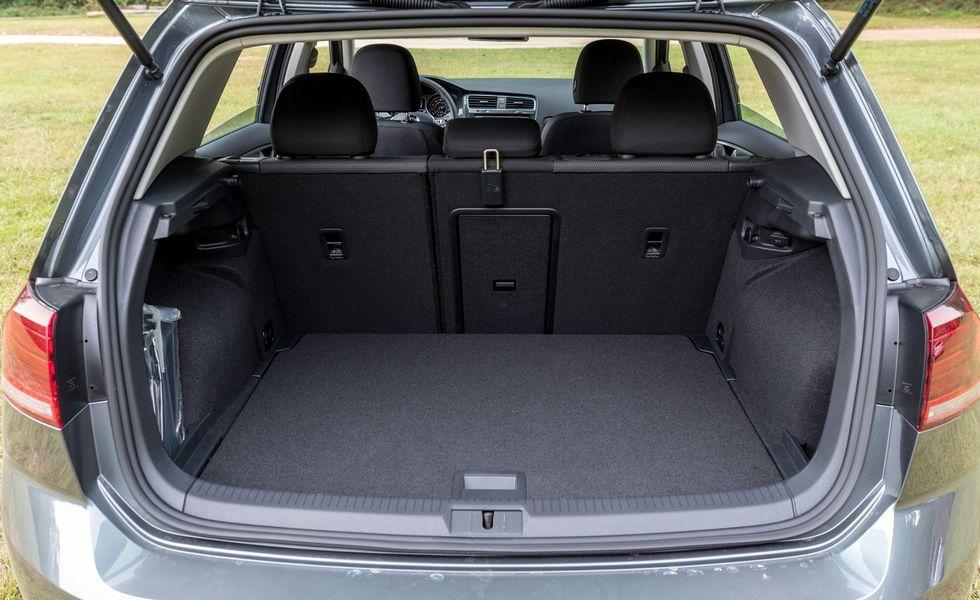
Hatch
Car
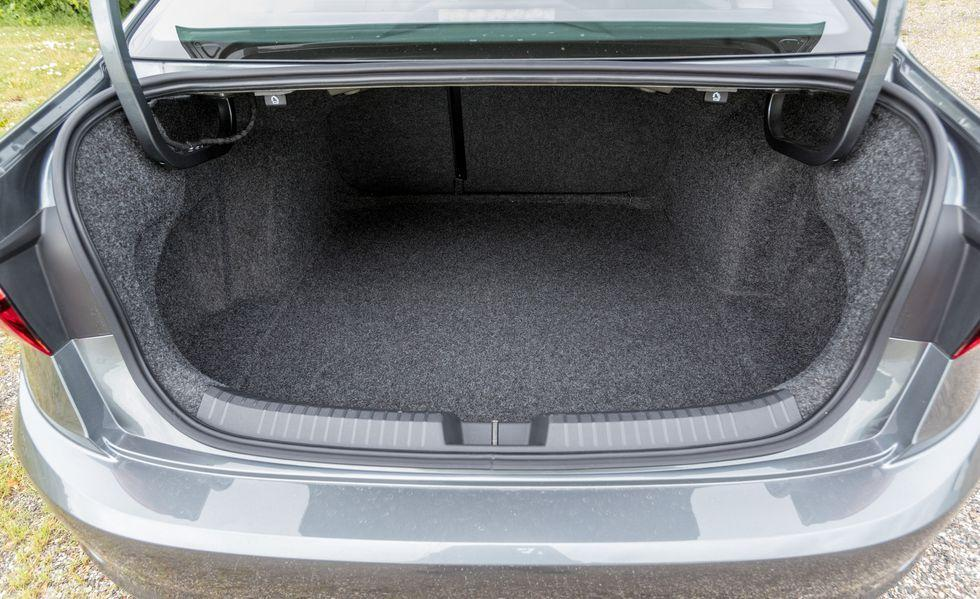
The distinction between a car and a hatch is that a car is a 4-door passenger car with a separate trunk, built on a three-box body. On the other hand, a hatchback is a 4-door vehicle with a tailgate that flips up, assembled on a two-box body.
Drivers make the mistake because the difference is understandably confusing as the app doesn't give any explanation of the difference.
Market B
In Market B, around 10% of registrations with a pick-up car on average need to be converted to a car. Feedback from the local team revealed that drivers who selected the wrong vehicle type were either unaware of the car selection or did not see it as an available option.
Market C
During the registration, 23 motor drivers registered as 4-wheel drivers, accounting for 53% of the total rejected leads, which led to a conversion drop of over 10%. According to the feedback from the local team, drivers often choose the vehicle option randomly.
Existing desgin
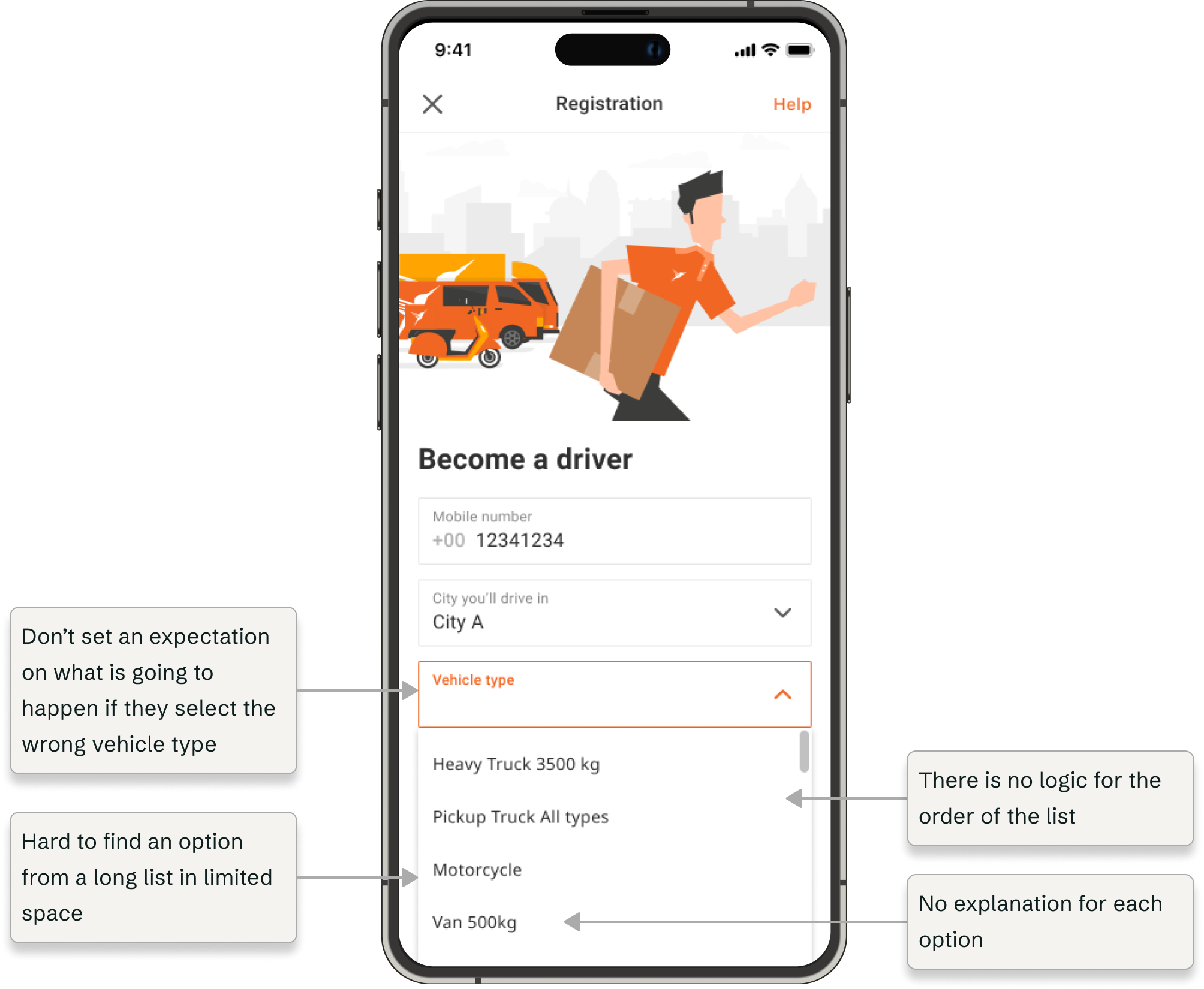
Based on the data and local team feedback, I also analyzed the current solution and made assumptions about the underlying causes.
Define Requirement
Identify three major problems through problem structuring
Based on feedback and design assessment, I structured the problem and identified three major problems that form the scope of the design solution.
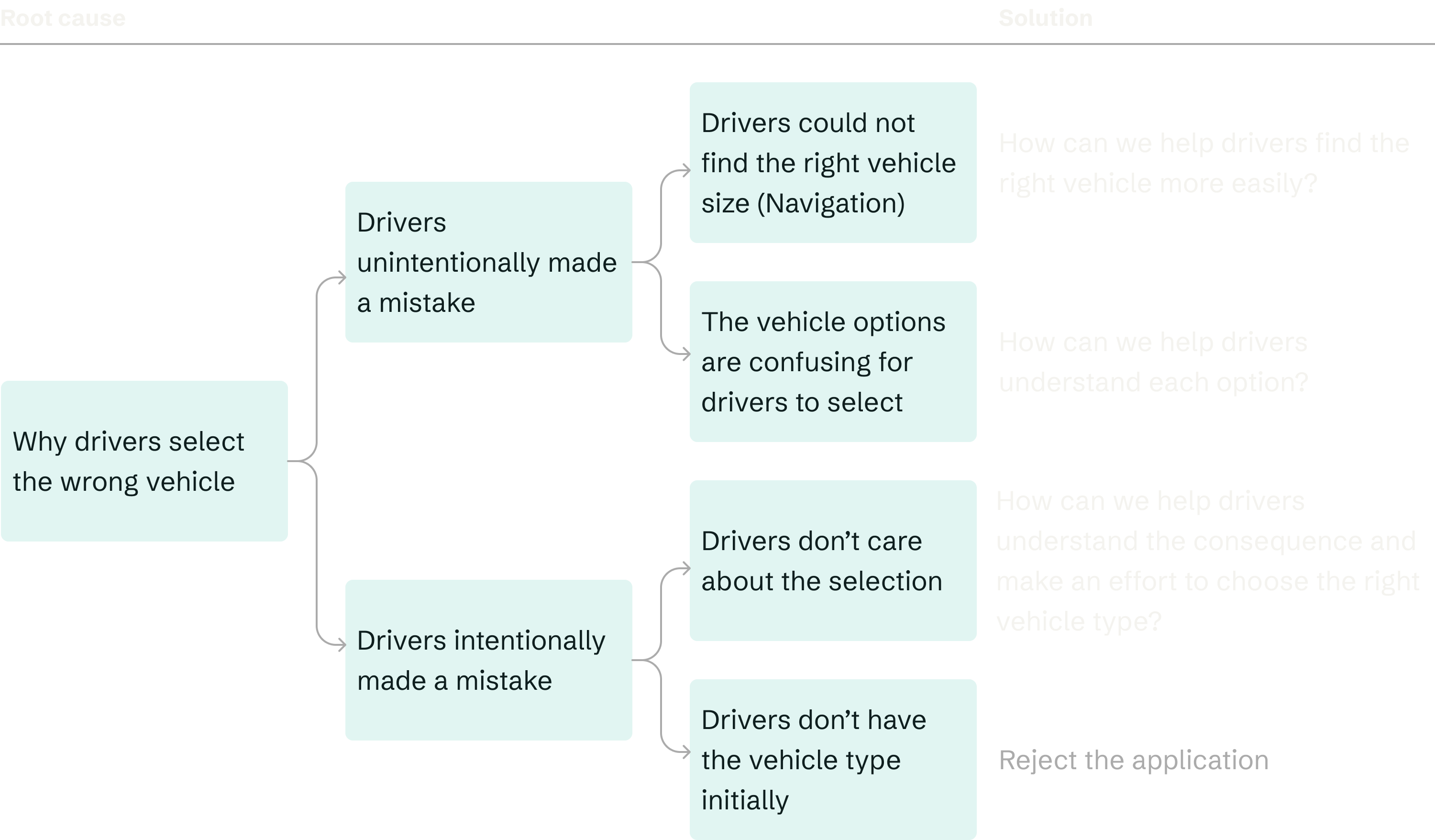
I rephrased the problem to be more precise based on the analysis
How can we help drivers easily find, understand, and select the right vehicle while understanding the consequences of not choosing the right options?
Hypothesis about the feature value
In order to make sure if we solve the problem, we set hypothesis.
- If we make the vehicle selection clearer for drivers to find and select the right vehicle easily, less drivers will select the wrong vehicles
- If we make it clearer that drivers should choose the right vehicle, otherwise their registration will be delayed, drivers are more inclined to choose the right vehicle
Design MVP
I designed MVP for each user story
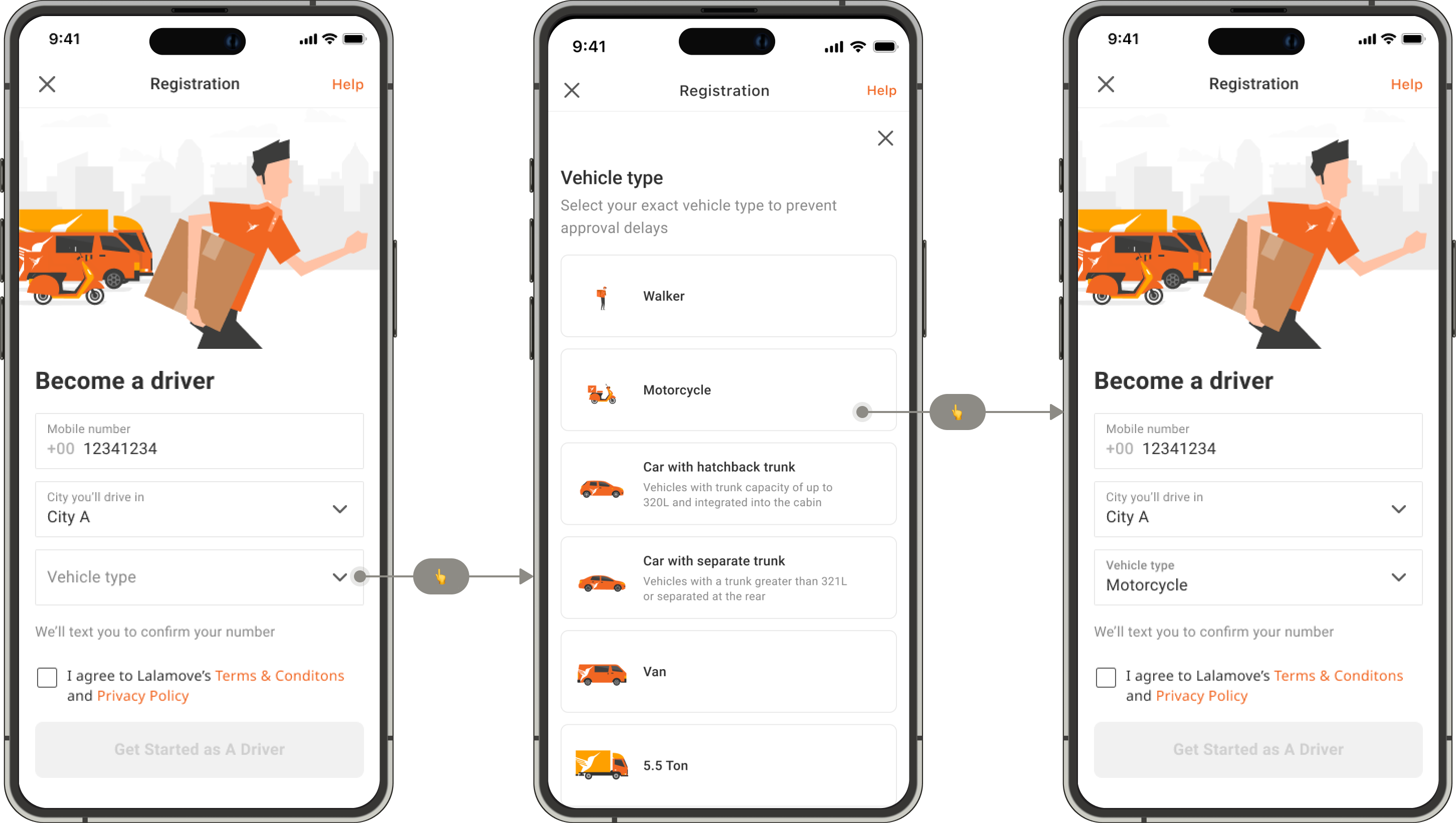
As a prospective driver, I want to scan options easily, so that I can find my vehicle
Expanding options to full-screen enhances visibility and reduces distractions during selection.
Ordering the vehicle options by size to reduce cognitive load. The existing design lacks logical order in vehicle options, causing difficulty for drivers in locating the right choice.
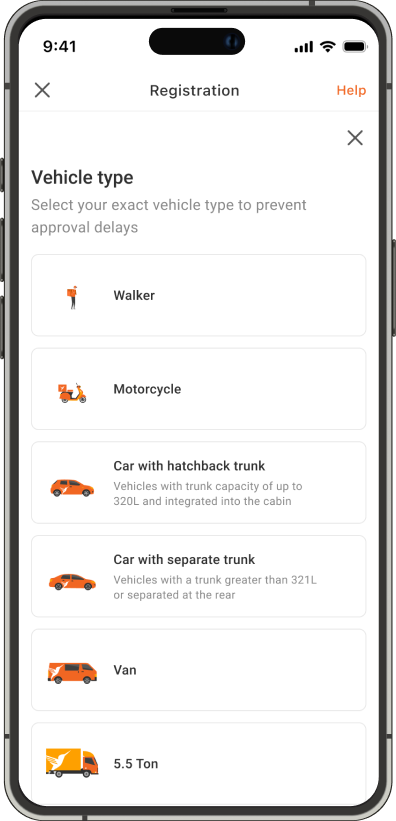
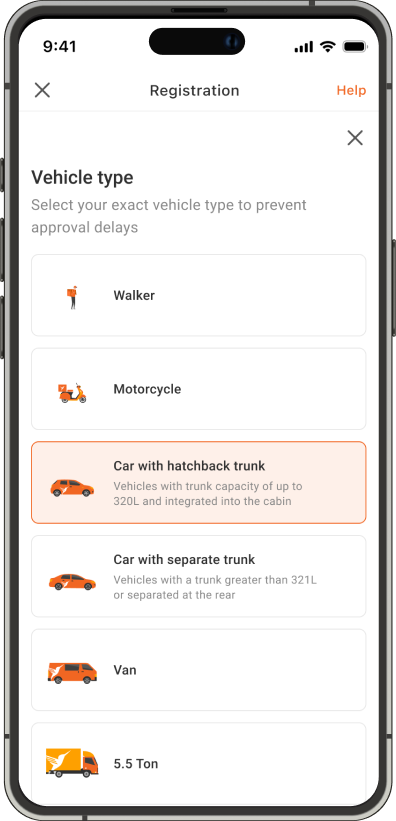
As a prospective driver, I want to understand each option, so that I can find my vehicle
Adding illustrations and descriptions improves clarity and distinguishes vehicle options, signaling drivers to choose carefully while aiding them in making informed selections among different vehicle types.
As a prospective driver, I want to understand the consequences, so that I don’t choose an option randomly
Help drivers understand the consequence of choosing the wrong vehicle: Describing consequences helps drivers understand the importance of their selection and avoid random selections.
Assess Testing
We launched incrementally in 5 testing markets and tracked the data to evaluate the solution's effectiveness
↓ 30%
Reduction in incorrect vehicle selections
↓ 2 hrs
Reduction in weekly workload to correct errors
↑ 3%
Increase in driver acquisition
Next steps
We continue to launch the feature in more markets to validate further.
Based on success in 5 markets, we aim to validate the feature in others; however, outcomes may vary due to market-specific issues.
We can research more on how prospective drivers select vehicles.
Local team discussions were helpful but lacked complete driver insights on vehicle selection. Further research can offer a deeper understanding of feature refinement.
Learnings
Despite the limitations, we can still create impactful solutions.
Limited tech resources often prompt quick fixes by adding elements. Assuming navigation was a key concern, I minimized tech costs by leveraging existing elements.
Engaging with the operation team proved to be helpful and impactful.
User feedback is crucial, but time constraints limit in-depth research for minor improvements. Relying on the local team's continuous user interaction yields valuable insights for better solutions.


New vehicle selection experience to prevent incorrect selection during driver registration
Increase in Driver supply has been a key success to the business to keep up with customer demand. During our analysis of the verification process, we identified an opportunity to optimize the verification team's workload specifically related to verifying drivers' vehicle types.
↓ 30%
Reduction in incorrect vehicle selections

↓ 2 hrs
Reduction in weekly workload to correct errors
↑ 3%
Increase in driver acquisition
Lalamove is an on-demand delivery platform that connects 13 million users with 1.2 million driver partners in 11 markets across the world. Lalamove driver-partner app is a tool for drivers to receive and manage delivery requests from customers.
My role
- Defined what we could solve with design with a product manager
- Designed the user interfaces and experiences for the feature
- Ensured feasibility during ideation and alignment with design during implementation by consulting with engineers
Opportunity
Our business aims to boost driver supply efficiency and cut costs by streamlining registration. We identified an opportunity to optimize the verification process for driver vehicle types, addressing common errors made during registration, particularly in markets prone to frequent mistakes.
Changing drivers' vehicle types during registration slows the registration and lowers the conversion rate while increasing operational costs.
The opportunity is
How might we help drivers select the right vehicle types, minimizing potential mistakes?
Goal
The goal is to increase the driver conversion rate and ease the local operation team's workload.
The product manager set the goal and success metrics for this feature. We want to target:
- Reduction in the number of wrong vehicle type selections in registration
- Reducing the local team’s workload by correcting driver vehicle selection errors
Existing solution

Steps
Understand Problem
Vehicle selection errors resulted in operational delays and conversion drops: confusion between car types, oversight in pick-up car registrations, and random selections among motor drivers.
The product manager set up the initial analysis, and I helped them clarify the root causes of the problem by asking questions and suggesting different ways to structure and analyze the problem.
Market A
The market had 409 incorrect vehicle selections in a week, resulting in a workload of approximately 1 hour per day for the local operation team. The primary issue was the mismatch between Car and Hatch drivers which comprises around 60% of the incorrect selections. Assuming each agent takes 3 minutes to verify, additional 20 applications could be processed daily.
Hatch
Car
The distinction between a car and a hatch is that a car is a 4-door passenger car with a separate trunk, built on a three-box body. On the other hand, a hatchback is a 4-door vehicle with a tailgate that flips up, assembled on a two-box body.
Drivers make the mistake because the difference is understandably confusing as the app doesn't give any explanation of the difference.
Market B
In Market B, around 10% of registrations with a pick-up car on average need to be converted to a car. Feedback from the local team revealed that drivers who selected the wrong vehicle type were either unaware of the car selection or did not see it as an available option.
Market C
During the registration, 23 motor drivers registered as 4-wheel drivers, accounting for 53% of the total rejected leads, which led to a conversion drop of over 10%. According to the feedback from the local team, drivers often choose the vehicle option randomly.
Existing desgin
Based on the data and local team feedback, I also analyzed the current solution and made assumptions about the underlying causes.
Define Requirement
Identify three major problems through problem structuring
Based on feedback and design assessment, I structured the problem and identified three major problems that form the scope of the design solution.
I rephrased the problem to be more precise based on the analysis
How can we help drivers easily find, understand, and select the right vehicle while understanding the consequences of not choosing the right options?
Hypothesis about the feature value
In order to make sure if we solve the problem, we set hypothesis.
- If we make the vehicle selection clearer for drivers to find and select the right vehicle easily, less drivers will select the wrong vehicles
- If we make it clearer that drivers should choose the right vehicle, otherwise their registration will be delayed, drivers are more inclined to choose the right vehicle
Design MVP
I designed MVP for each user story
As a prospective driver, I want to scan options easily, so that I can find my vehicle
Expanding options to full-screen enhances visibility and reduces distractions during selection.
Ordering the vehicle options by size to reduce cognitive load. The existing design lacks logical order in vehicle options, causing difficulty for drivers in locating the right choice.
As a prospective driver, I want to understand each option, so that I can find my vehicle
Adding illustrations and descriptions improves clarity and distinguishes vehicle options, signaling drivers to choose carefully while aiding them in making informed selections among different vehicle types.
As a prospective driver, I want to understand the consequences, so that I don’t choose an option randomly
Help drivers understand the consequence of choosing the wrong vehicle: Describing consequences helps drivers understand the importance of their selection and avoid random selections.
Assess Testing
We launched incrementally in 5 testing markets and tracked the data to evaluate the solution's effectiveness
↓ 30%
Reduction in incorrect vehicle selections
↓ 2 hrs
Reduction in weekly workload to correct errors
↑ 3%
Increase in driver acquisition
Next steps
We continue to launch the feature in more markets to validate further.
Based on success in 5 markets, we aim to validate the feature in others; however, outcomes may vary due to market-specific issues.
We can research more on how prospective drivers select vehicles.
Local team discussions were helpful but lacked complete driver insights on vehicle selection. Further research can offer a deeper understanding of feature refinement.
Learnings
Despite the limitations, we can still create impactful solutions.
Limited tech resources often prompt quick fixes by adding elements. Assuming navigation was a key concern, I minimized tech costs by leveraging existing elements.
Engaging with the operation team proved to be helpful and impactful.
User feedback is crucial, but time constraints limit in-depth research for minor improvements. Relying on the local team's continuous user interaction yields valuable insights for better solutions.


New vehicle selection experience to prevent incorrect selection during driver registration
Increase in Driver supply has been a key success to the business to keep up with customer demand. During our analysis of the verification process, we identified an opportunity to optimize the verification team's workload specifically related to verifying drivers' vehicle types.
↓ 30%
Reduction in incorrect vehicle selections
↓ 2 hrs
Reduction in weekly workload to correct errors
↑ 3%
Increase in driver acquisition
Lalamove is an on-demand delivery platform that connects 13 million users with 1.2 million driver partners in 11 markets across the world. Lalamove driver-partner app is a tool for drivers to receive and manage delivery requests from customers.
My role
- Defined what we could solve with design with a product manager
- Designed the user interfaces and experiences for the feature
- Ensured feasibility during ideation and alignment with design during implementation by consulting with engineers
Opportunity
Our business aims to boost driver supply efficiency and cut costs by streamlining registration. We identified an opportunity to optimize the verification process for driver vehicle types, addressing common errors made during registration, particularly in markets prone to frequent mistakes.
Changing drivers' vehicle types during registration slows the registration and lowers the conversion rate while increasing operational costs.
The opportunity is
How might we help drivers select the right vehicle types, minimizing potential mistakes?
Goal
The goal is to increase the driver conversion rate and ease the local operation team's workload.
The product manager set the goal and success metrics for this feature. We want to target:
- Reduction in the number of wrong vehicle type selections in registration
- Reducing the local team’s workload by correcting driver vehicle selection errors
Existing solution

Steps
Understand Problem
Vehicle selection errors resulted in operational delays and conversion drops: confusion between car types, oversight in pick-up car registrations, and random selections among motor drivers.
The product manager set up the initial analysis, and I helped them clarify the root causes of the problem by asking questions and suggesting different ways to structure and analyze the problem.
Market A
The market had 409 incorrect vehicle selections in a week, resulting in a workload of approximately 1 hour per day for the local operation team. The primary issue was the mismatch between Car and Hatch drivers which comprises around 60% of the incorrect selections. Assuming each agent takes 3 minutes to verify, additional 20 applications could be processed daily.
Hatch
Car
The distinction between a car and a hatch is that a car is a 4-door passenger car with a separate trunk, built on a three-box body. On the other hand, a hatchback is a 4-door vehicle with a tailgate that flips up, assembled on a two-box body.
Drivers make the mistake because the difference is understandably confusing as the app doesn't give any explanation of the difference.
Market B
In Market B, around 10% of registrations with a pick-up car on average need to be converted to a car. Feedback from the local team revealed that drivers who selected the wrong vehicle type were either unaware of the car selection or did not see it as an available option.
Market C
During the registration, 23 motor drivers registered as 4-wheel drivers, accounting for 53% of the total rejected leads, which led to a conversion drop of over 10%. According to the feedback from the local team, drivers often choose the vehicle option randomly.
Existing desgin
Based on the data and local team feedback, I also analyzed the current solution and made assumptions about the underlying causes.
Define Requirement
Identify three major problems through problem structuring
Based on feedback and design assessment, I structured the problem and identified three major problems that form the scope of the design solution.
I rephrased the problem to be more precise based on the analysis
How can we help drivers easily find, understand, and select the right vehicle while understanding the consequences of not choosing the right options?
Hypothesis about the feature value
In order to make sure if we solve the problem, we set hypothesis.
- If we make the vehicle selection clearer for drivers to find and select the right vehicle easily, less drivers will select the wrong vehicles
- If we make it clearer that drivers should choose the right vehicle, otherwise their registration will be delayed, drivers are more inclined to choose the right vehicle
Design MVP
I designed MVP for each user story
As a prospective driver, I want to scan options easily, so that I can find my vehicle
Expanding options to full-screen enhances visibility and reduces distractions during selection.
Ordering the vehicle options by size to reduce cognitive load. The existing design lacks logical order in vehicle options, causing difficulty for drivers in locating the right choice.
As a prospective driver, I want to understand each option, so that I can find my vehicle
Adding illustrations and descriptions improves clarity and distinguishes vehicle options, signaling drivers to choose carefully while aiding them in making informed selections among different vehicle types.
As a prospective driver, I want to understand the consequences, so that I don’t choose an option randomly
Help drivers understand the consequence of choosing the wrong vehicle: Describing consequences helps drivers understand the importance of their selection and avoid random selections.
Assess Testing
We launched incrementally in 5 testing markets and tracked the data to evaluate the solution's effectiveness
↓ 30%
Reduction in incorrect vehicle selections
↓ 2 hrs
Reduction in weekly workload to correct errors
↑ 3%
Increase in driver acquisition
Next steps
We continue to launch the feature in more markets to validate further.
Based on success in 5 markets, we aim to validate the feature in others; however, outcomes may vary due to market-specific issues.
We can research more on how prospective drivers select vehicles.
Local team discussions were helpful but lacked complete driver insights on vehicle selection. Further research can offer a deeper understanding of feature refinement.
Learnings
Despite the limitations, we can still create impactful solutions.
Limited tech resources often prompt quick fixes by adding elements. Assuming navigation was a key concern, I minimized tech costs by leveraging existing elements.
Engaging with the operation team proved to be helpful and impactful.
User feedback is crucial, but time constraints limit in-depth research for minor improvements. Relying on the local team's continuous user interaction yields valuable insights for better solutions.


