Fail delivery experience study to inform product decisions

Failed deliveries represent a persistent and unresolved challenge in Lalamove. This issue creates frustration for waiting customers and wastes drivers' time. Without standardized protocols for handling delivery failures, drivers improvise solutions, resulting in inconsistent customer experiences, increased support contacts, and unauthorized offline arrangements.
Despite recognizing this problem, we've relied on assumptions rather than research to understand driver and customer behaviors. I've initiated comprehensive research to map the delivery journey, providing data-driven insights that will inform future feature development

Helped shape the new help center content


Provided insight into driver behavior that would be useful moving forward
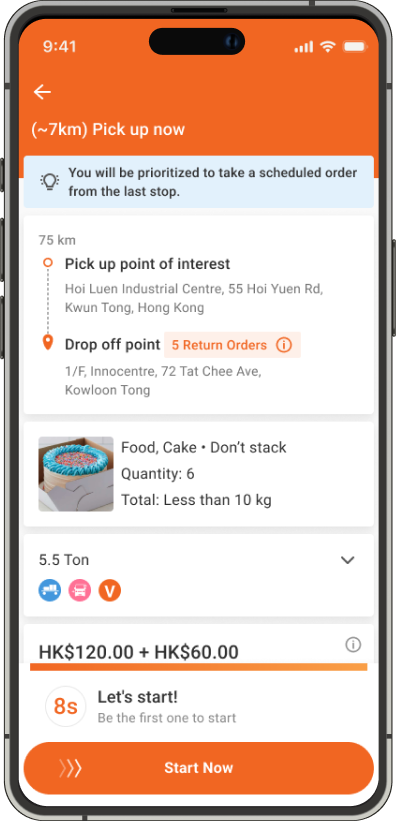
Lalamove is an on-demand delivery platform that connects 13 million users with 1.2 million driver partners in 11 markets across the world. Lalamove driver-partner app is a tool for drivers to receive and manage delivery requests from customers.
My role
- Initiated and leading the research effort to complete
- Defined the objectives and methodologies to get buy-in from the design, product, research, and local operation teams
- Recruited the participants in collaboration with the local operation teams
- Interviewed 10 participants with designers, researchers, and local operation teams in local languages
- Synthesized and presented findings to the product team and local operation team
Goal
Our research aims to understand specifically:
- How drivers handle failed deliveries, including their actions, compensation motivations, and expected outcomes
- The financial dynamics between parties, including driver compensation expectations and customer payment thresholds
- Circumstances that trigger escalation to customer support versus direct resolution
- Customer expectations throughout the failed delivery experience

Methodologies
Combining survey and interviews to understand driver and customer experience
I dedicated more time interviewing drivers to understand driver experience in research, as the main actor in fail delivery is a driver with a package. While acknowledging customer experience importance, my research approach for customer experience was more quantitative and less detailed via a survey.
Focused on 3 markets with many corporate clients
Corporate clients tend to order a high volume of orders, and they are more willing to give feedback to us. Moreover, the product team envisioned any enhancement to failed deliveries would be available for paid clients.
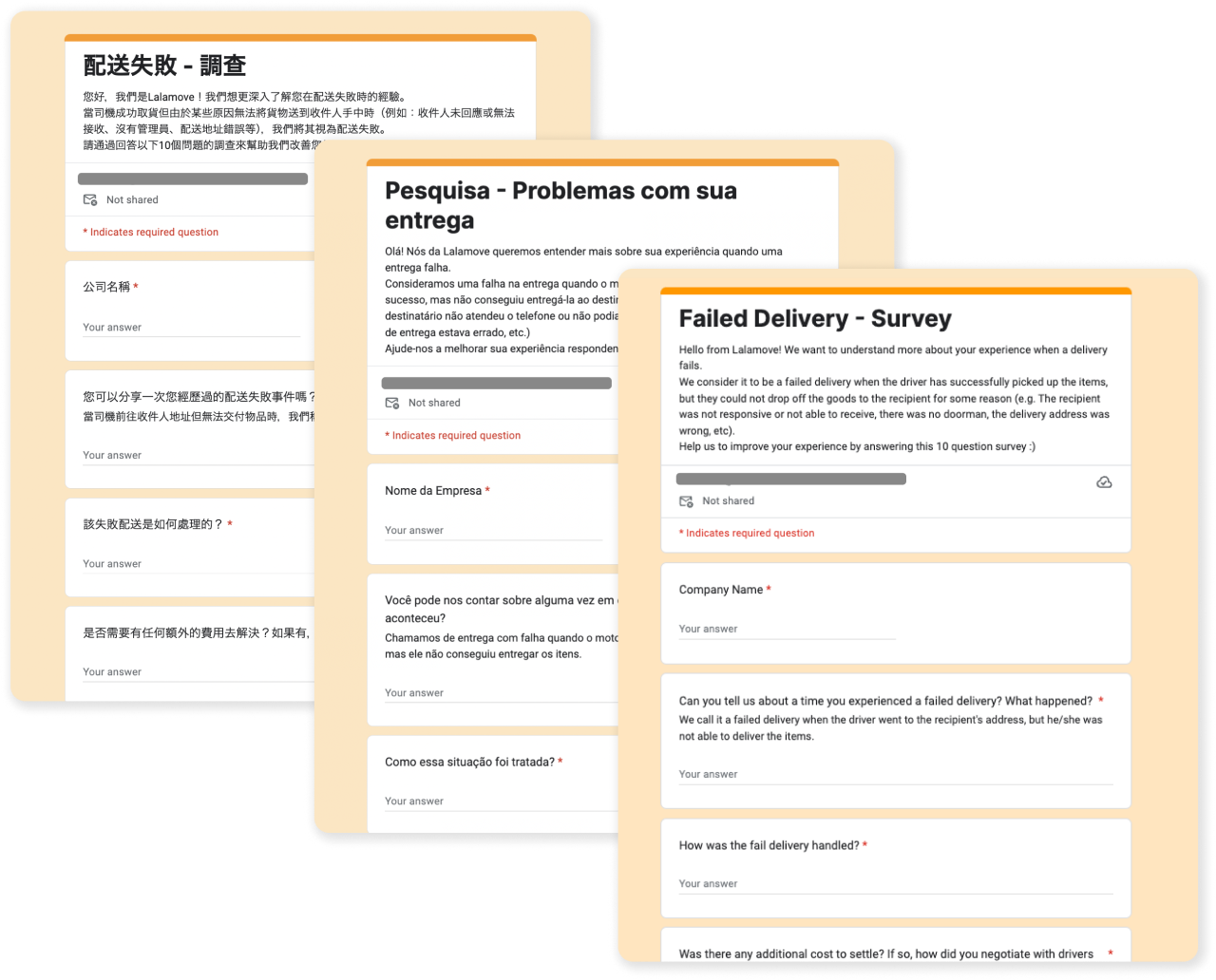
Survey 16 corporate customers via Google Forms to understand the overall theme of customer pain points
I managed to get feedback from 16 corporate customers whom we are in contact with through our account managers in the 3 markets.
Key questions:
- What do customers expect to happen after drivers are not able to deliver?
- When do customers know about the failed delivery?
- From past experience, do customers usually pay for the return/rescheduled deliveries?
- Do customers have pre-arrangement/SOP with drivers in case recipients are unavailable?
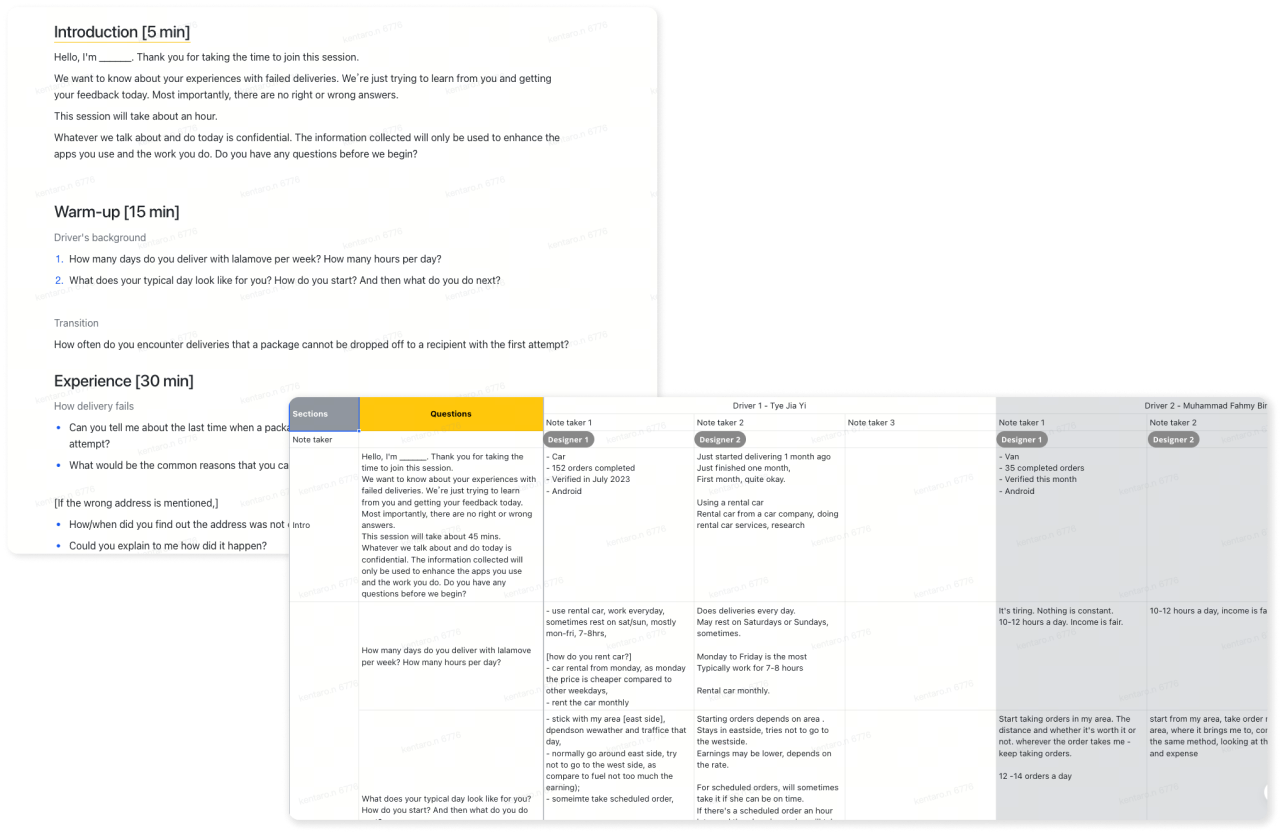
Interview 10 drivers via a video call to understand the driver’s failed delivery process and pain points in depth
We managed to interview 10 drivers who have contacted CX in the past about failed deliveries or have marked orders as failed deliveries in the app.
Key questions:
- What would drivers do when they cannot meet recipients?
- What are their preferences and past experiences on what to do?
- How long are drivers willing to wait?
- How much do drivers expect to be paid?
Report
Understanding the context behind failed deliveries
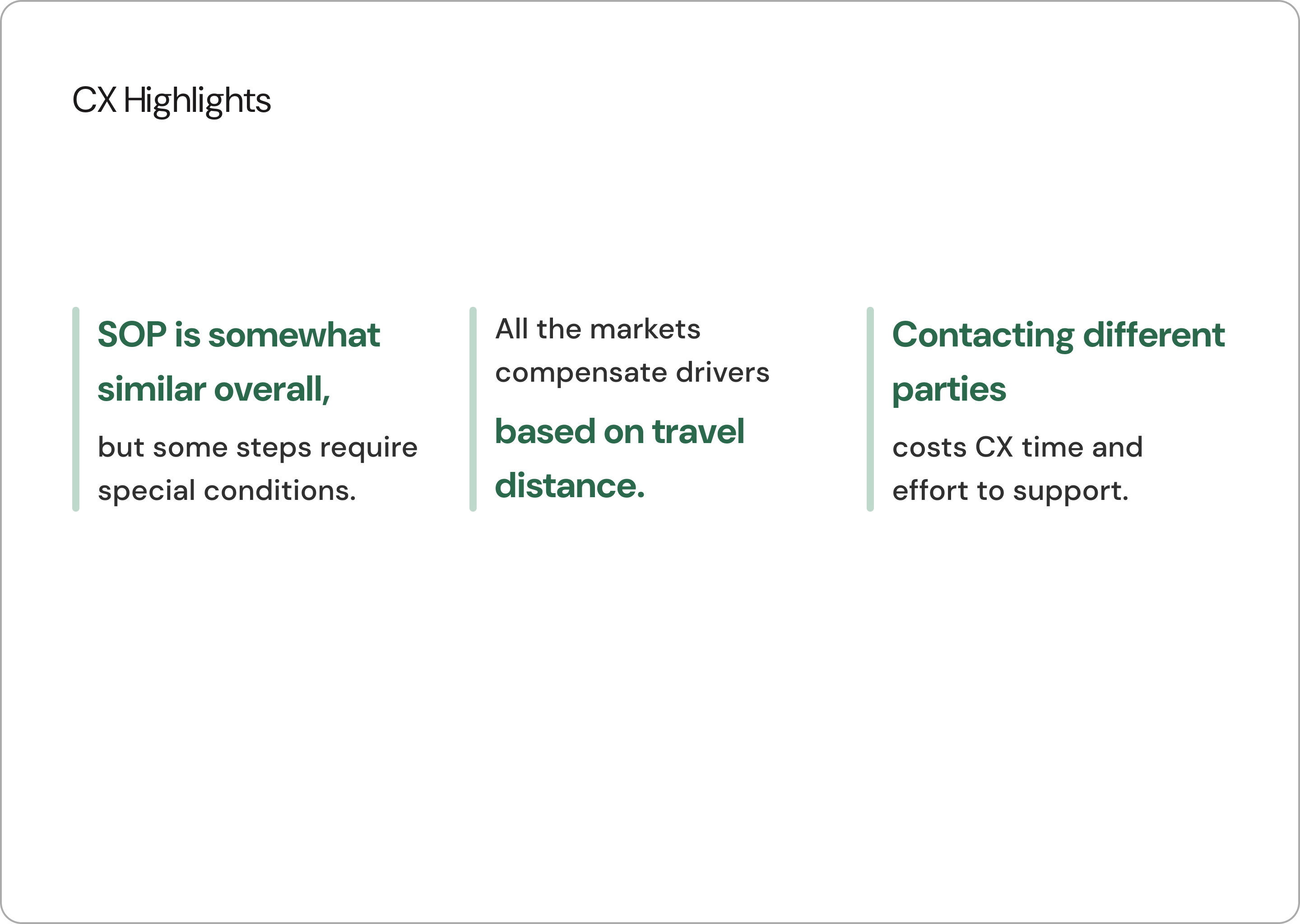
I consulted with the local operation and CX teams in the 3 markets to understand more about failed deliveries before I began to talk to customers and drivers.

1/5
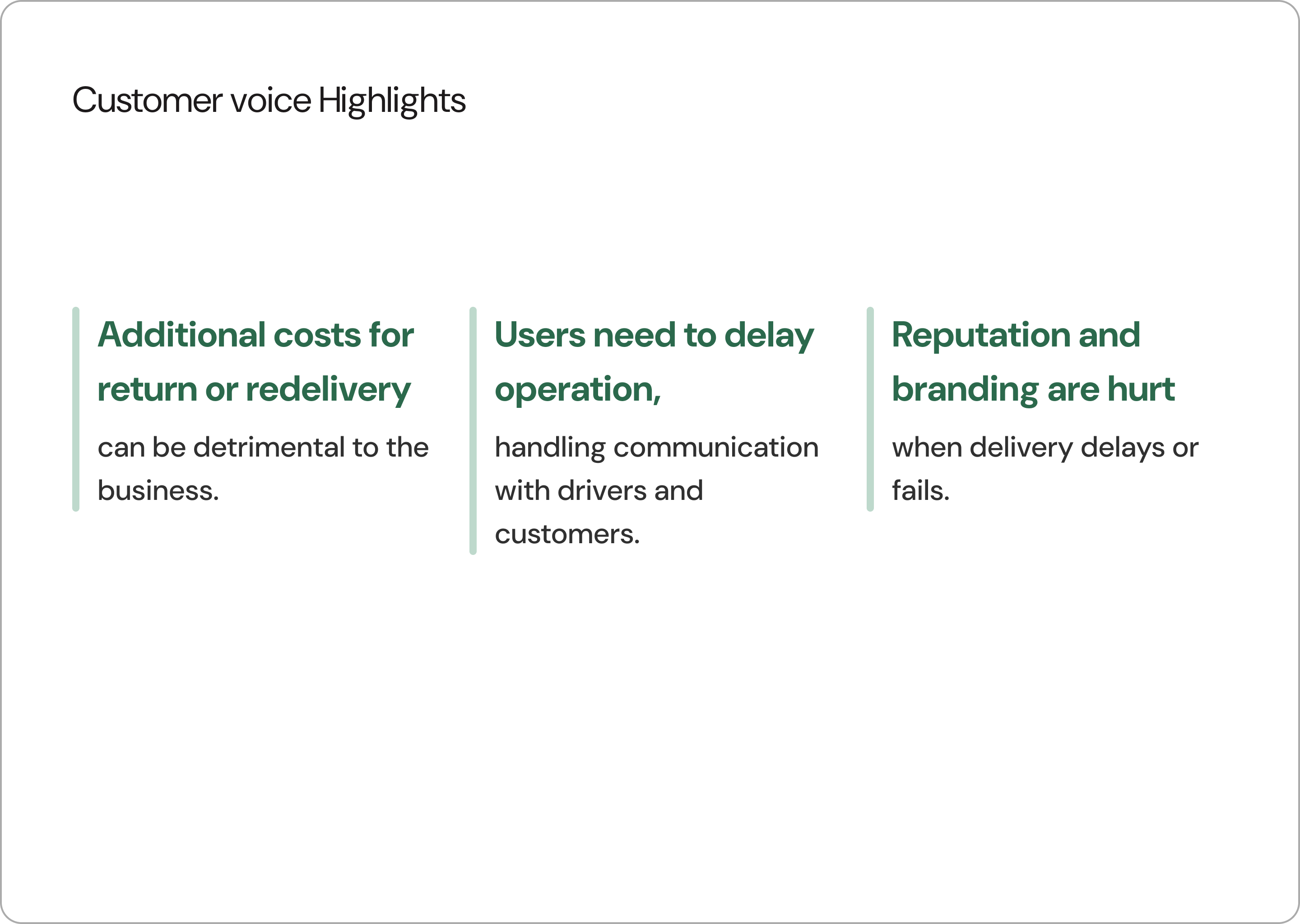
Customer voice
1/6
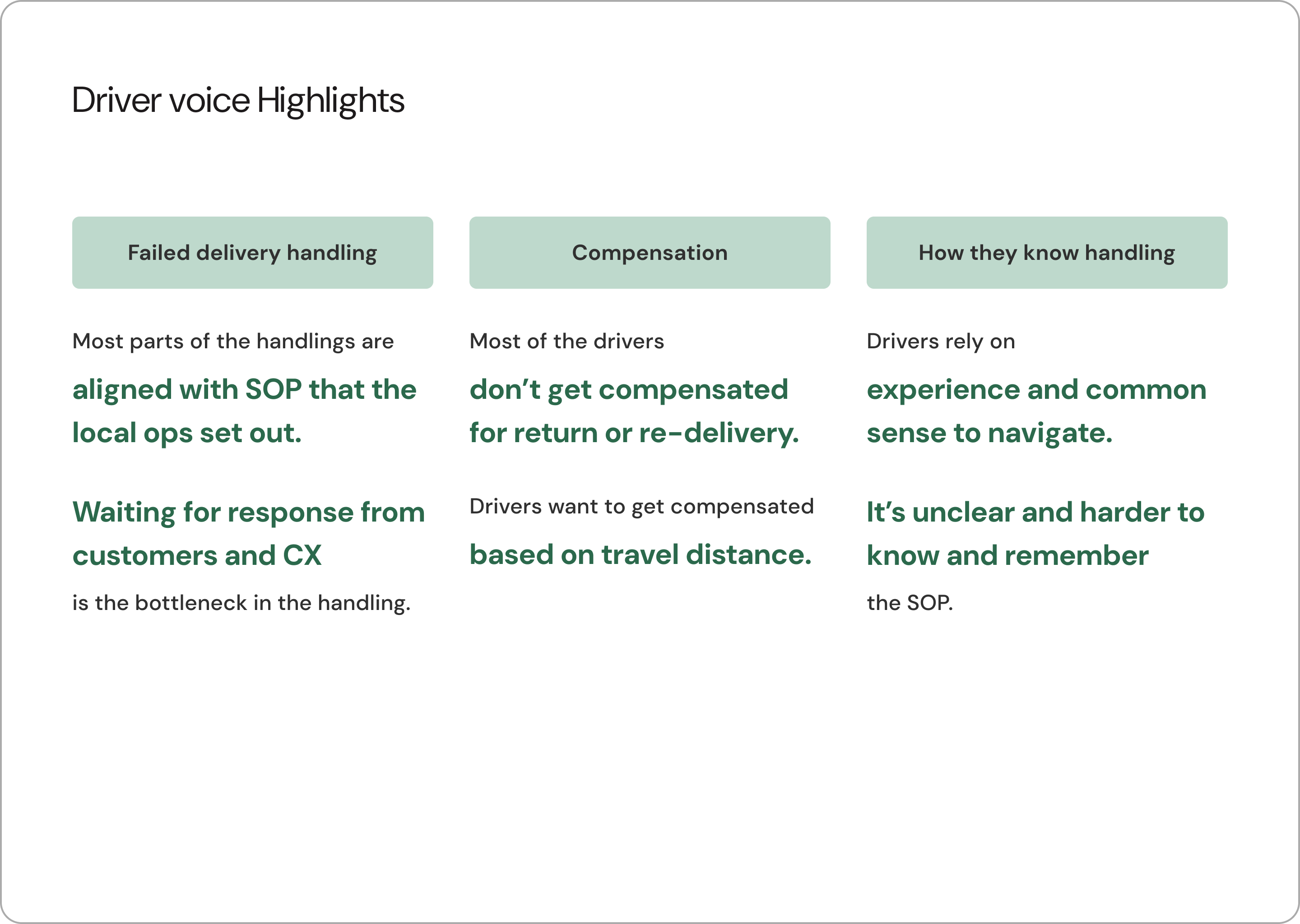
Driver voice
1/5
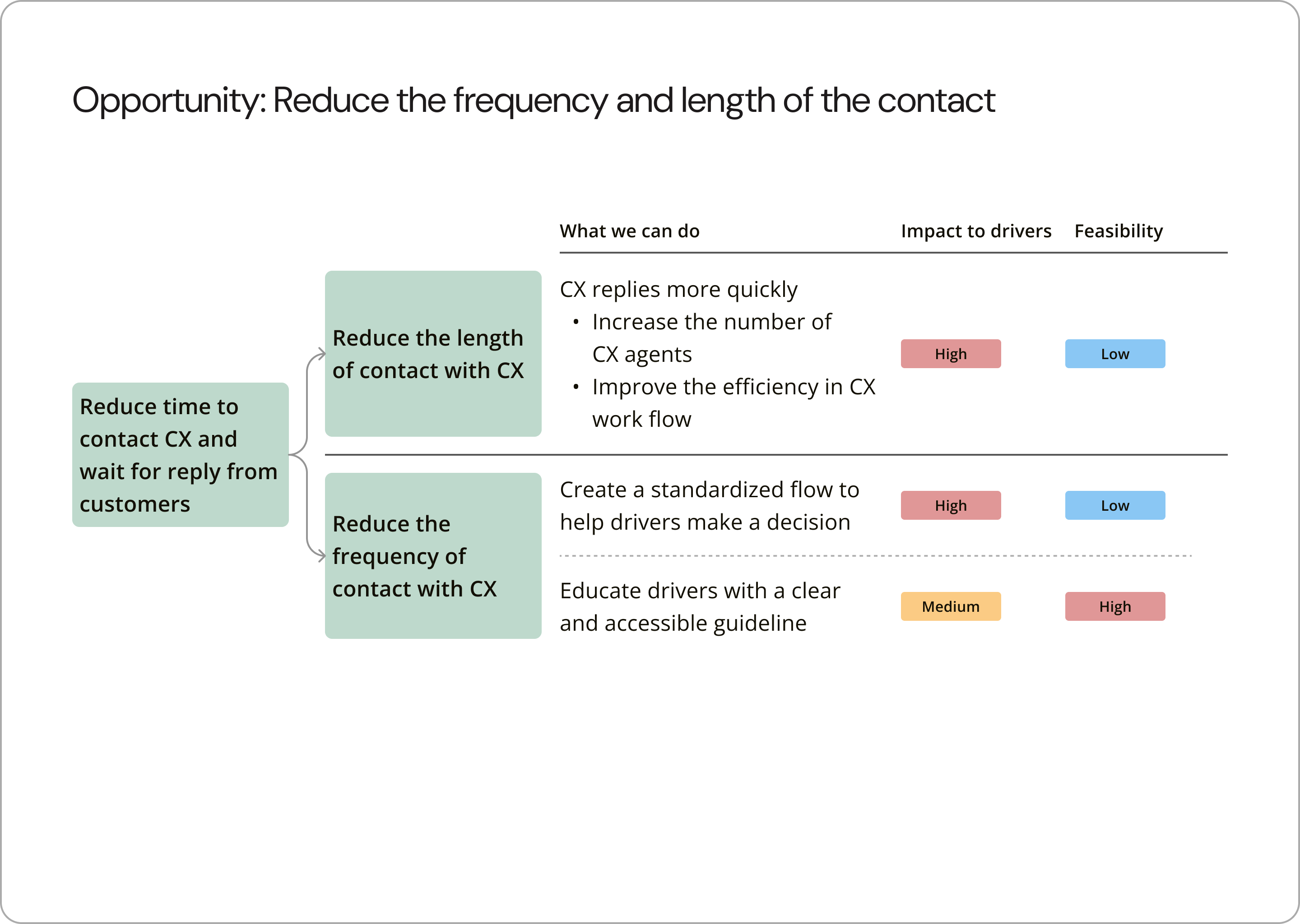
Opportunities & Suggestions
1/4
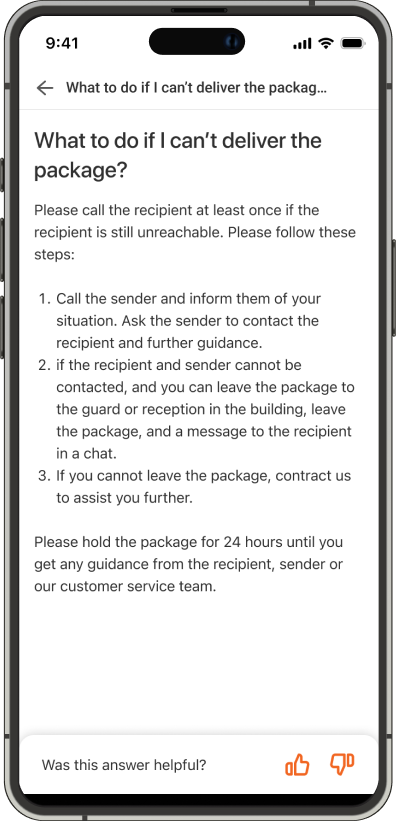
The research findings were instrumental in developing the content for our new driver help center.
We designed content to assist drivers when they encounter delivery failures. This FAQ aims to empower our drivers to resolve issues independently.
A key insight gained to leverage in our design
Drivers prioritize efficiency over compensation, a key insight to leverage in our design. This insight formed a core design principle for our platform. While financial gain is crucial for drivers, they care more about completing orders swiftly with minimum hassle, rather than battling for compensation.
Next steps
Based on the insights and recommendations, I will propose a new feature in the following year.
As we address business needs, I will advocate driver-centric features based on the driver feedback.
I continue advocating for research to understand our users.
Due to time limitations and team habits, we often bypass research. I'm working to help create a culture where research is more valued.
Learnings
Thorough briefings with the local team proved more crucial than anticipated.
During online interviews with their assistance, language and cultural differences may have influenced phrasing. Next time, I will offer a more detailed guide to asking questions effectively and clarify research intentions.
Great learning experience communicating with diverse stakeholders to gain support and buy-in.
Engaging with diverse stakeholders, including product, research, and operation teams across three markets, was rewarding. It enhanced my communication skills by effectively explaining reasons, objectives, timing, and methods to gain support for the research.
Fail delivery experience study to inform product decisions


Failed deliveries represent a persistent and unresolved challenge in Lalamove. This issue creates frustration for waiting customers and wastes drivers' time. Without standardized protocols for handling delivery failures, drivers improvise solutions, resulting in inconsistent customer experiences, increased support contacts, and unauthorized offline arrangements.
Despite recognizing this problem, we've relied on assumptions rather than research to understand driver and customer behaviors. I've initiated comprehensive research to map the delivery journey, providing data-driven insights that will inform future feature development
Helped shape the new help center content

Provided insight into driver behavior that would be useful moving forward
Lalamove is an on-demand delivery platform that connects 13 million users with 1.2 million driver partners in 11 markets across the world. Lalamove driver-partner app is a tool for drivers to receive and manage delivery requests from customers.
My role
- Initiated and leading the research effort to complete
- Defined the objectives and methodologies to get buy-in from the design, product, research, and local operation teams
- Recruited the participants in collaboration with the local operation teams
- Interviewed 10 participants with designers, researchers, and local operation teams in local languages
- Synthesized and presented findings to the product team and local operation team
Goal
Our research aims to understand specifically:
- How drivers handle failed deliveries, including their actions, compensation motivations, and expected outcomes
- The financial dynamics between parties, including driver compensation expectations and customer payment thresholds
- Circumstances that trigger escalation to customer support versus direct resolution
- Customer expectations throughout the failed delivery experience

Methodologies
Combining survey and interviews to understand driver and customer experience
I dedicated more time interviewing drivers to understand driver experience in research, as the main actor in fail delivery is a driver with a package. While acknowledging customer experience importance, my research approach for customer experience was more quantitative and less detailed via a survey.
Focused on 3 markets with many corporate clients
Corporate clients tend to order a high volume of orders, and they are more willing to give feedback to us. Moreover, the product team envisioned any enhancement to failed deliveries would be available for paid clients.
Survey 16 corporate customers via Google Forms to understand the overall theme of customer pain points
I managed to get feedback from 16 corporate customers whom we are in contact with through our account managers in the 3 markets.
Key questions:
- What do customers expect to happen after drivers are not able to deliver?
- When do customers know about the failed delivery?
- From past experience, do customers usually pay for the return/rescheduled deliveries?
- Do customers have pre-arrangement/SOP with drivers in case recipients are unavailable?
Interview 10 drivers via a video call to understand the driver’s failed delivery process and pain points in depth
We managed to interview 10 drivers who have contacted CX in the past about failed deliveries or have marked orders as failed deliveries in the app.
Key questions:
- What would drivers do when they cannot meet recipients?
- What are their preferences and past experiences on what to do?
- How long are drivers willing to wait?
- How much do drivers expect to be paid?
Report
Understanding the context behind failed deliveries
I consulted with the local operation and CX teams in the 3 markets to understand more about failed deliveries before I began to talk to customers and drivers.
1/5
Customer voice
1/6
Driver voice
1/5
Opportunities & Suggestions
1/4
The research findings were instrumental in developing the content for our new driver help center.
We designed content to assist drivers when they encounter delivery failures. This FAQ aims to empower our drivers to resolve issues independently.
A key insight gained to leverage in our design
Drivers prioritize efficiency over compensation, a key insight to leverage in our design. This insight formed a core design principle for our platform. While financial gain is crucial for drivers, they care more about completing orders swiftly with minimum hassle, rather than battling for compensation.
Next steps
Based on the insights and recommendations, I will propose a new feature in the following year.
As we address business needs, I will advocate driver-centric features based on the driver feedback.
I continue advocating for research to understand our users.
Due to time limitations and team habits, we often bypass research. I'm working to help create a culture where research is more valued.
Learnings
Thorough briefings with the local team proved more crucial than anticipated.
During online interviews with their assistance, language and cultural differences may have influenced phrasing. Next time, I will offer a more detailed guide to asking questions effectively and clarify research intentions.
Great learning experience communicating with diverse stakeholders to gain support and buy-in.
Engaging with diverse stakeholders, including product, research, and operation teams across three markets, was rewarding. It enhanced my communication skills by effectively explaining reasons, objectives, timing, and methods to gain support for the research.
Fail delivery experience study to inform product decisions

Failed deliveries represent a persistent and unresolved challenge in Lalamove. This issue creates frustration for waiting customers and wastes drivers' time. Without standardized protocols for handling delivery failures, drivers improvise solutions, resulting in inconsistent customer experiences, increased support contacts, and unauthorized offline arrangements.
Despite recognizing this problem, we've relied on assumptions rather than research to understand driver and customer behaviors. I've initiated comprehensive research to map the delivery journey, providing data-driven insights that will inform future feature development
Helped shape the new help center content
Provided insight into driver behavior that would be useful moving forward
Lalamove is an on-demand delivery platform that connects 13 million users with 1.2 million driver partners in 11 markets across the world. Lalamove driver-partner app is a tool for drivers to receive and manage delivery requests from customers.
My role
- Initiated and leading the research effort to complete
- Defined the objectives and methodologies to get buy-in from the design, product, research, and local operation teams
- Recruited the participants in collaboration with the local operation teams
- Interviewed 10 participants with designers, researchers, and local operation teams in local languages
- Synthesized and presented findings to the product team and local operation team
Goal
Our research aims to understand specifically:
- How drivers handle failed deliveries, including their actions, compensation motivations, and expected outcomes
- The financial dynamics between parties, including driver compensation expectations and customer payment thresholds
- Circumstances that trigger escalation to customer support versus direct resolution
- Customer expectations throughout the failed delivery experience

Methodologies
Combining survey and interviews to understand driver and customer experience
I dedicated more time interviewing drivers to understand driver experience in research, as the main actor in fail delivery is a driver with a package. While acknowledging customer experience importance, my research approach for customer experience was more quantitative and less detailed via a survey.
Focused on 3 markets with many corporate clients
Corporate clients tend to order a high volume of orders, and they are more willing to give feedback to us. Moreover, the product team envisioned any enhancement to failed deliveries would be available for paid clients.
Survey 16 corporate customers via Google Forms to understand the overall theme of customer pain points
I managed to get feedback from 16 corporate customers whom we are in contact with through our account managers in the 3 markets.
Key questions:
- What do customers expect to happen after drivers are not able to deliver?
- When do customers know about the failed delivery?
- From past experience, do customers usually pay for the return/rescheduled deliveries?
- Do customers have pre-arrangement/SOP with drivers in case recipients are unavailable?
Interview 10 drivers via a video call to understand the driver’s failed delivery process and pain points in depth
We managed to interview 10 drivers who have contacted CX in the past about failed deliveries or have marked orders as failed deliveries in the app.
Key questions:
- What would drivers do when they cannot meet recipients?
- What are their preferences and past experiences on what to do?
- How long are drivers willing to wait?
- How much do drivers expect to be paid?
Report
Understanding the context behind failed deliveries
I consulted with the local operation and CX teams in the 3 markets to understand more about failed deliveries before I began to talk to customers and drivers.
1/5
Customer voice
1/6
Driver voice
1/5
Opportunities & Suggestions
1/4
The research findings were instrumental in developing the content for our new driver help center.
We designed content to assist drivers when they encounter delivery failures. This FAQ aims to empower our drivers to resolve issues independently.
A key insight gained to leverage in our design
Drivers prioritize efficiency over compensation, a key insight to leverage in our design. This insight formed a core design principle for our platform. While financial gain is crucial for drivers, they care more about completing orders swiftly with minimum hassle, rather than battling for compensation.
Next steps
Based on the insights and recommendations, I will propose a new feature in the following year.
As we address business needs, I will advocate driver-centric features based on the driver feedback.
I continue advocating for research to understand our users.
Due to time limitations and team habits, we often bypass research. I'm working to help create a culture where research is more valued.
Learnings
Thorough briefings with the local team proved more crucial than anticipated.
During online interviews with their assistance, language and cultural differences may have influenced phrasing. Next time, I will offer a more detailed guide to asking questions effectively and clarify research intentions.
Great learning experience communicating with diverse stakeholders to gain support and buy-in.
Engaging with diverse stakeholders, including product, research, and operation teams across three markets, was rewarding. It enhanced my communication skills by effectively explaining reasons, objectives, timing, and methods to gain support for the research.